VoIP for Restaurants and Customer Communications
Restaurant employees often need to handle phone calls while serving guests, coordinating orders, managing tables, working with vendors, and keeping daily operations moving.
Customers may call about reservations, hours, menu questions, takeout, directions, or other restaurant information. Managers and employees may also receive calls from suppliers, service providers, and other business contacts.
M-Tech Digital provides Business VoIP for restaurants with available capabilities including voicemail, IVR auto attendant, Ring Groups, Call Queues, scheduled inbound call routing, SMS messaging, Mobile VoIP, and CDR (Call Detail Record) and statistics.
We serve organizations nationwide, with priority service areas in New York, New Jersey, California, Illinois, Wisconsin, and Florida.
Design Phone Service Around Restaurant Operations
Restaurant communication is different from a traditional office environment.
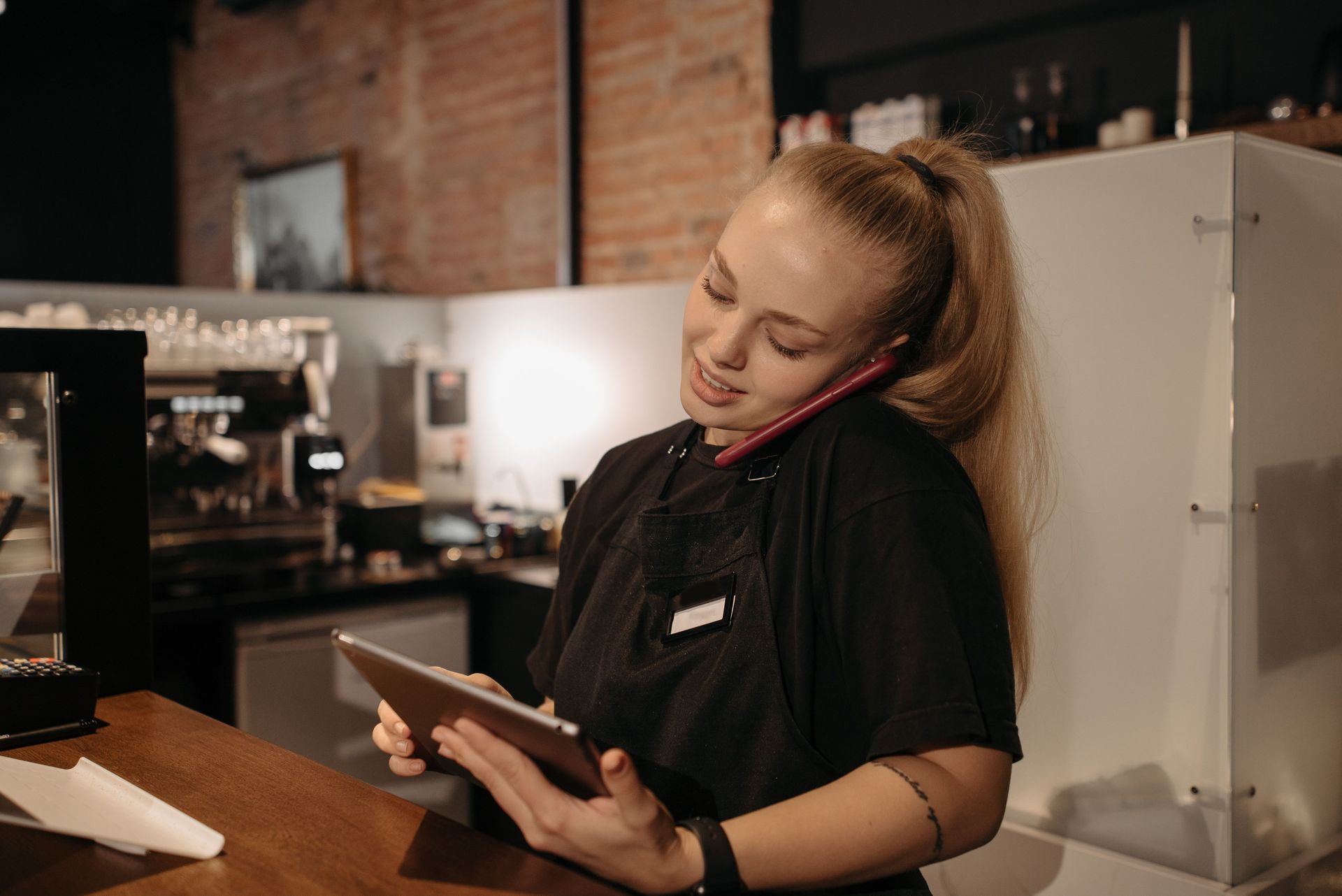
Employees answering calls may also be greeting guests, managing tables, preparing orders, or handling other responsibilities. The busiest time for the phone may overlap with the busiest period in the dining room.
That makes simplicity important.
Start by identifying the most common reasons customers call. Then determine who should handle each type of inquiry and what should happen when that person cannot answer immediately.
A restaurant's phone setup should support its operational workflow without creating unnecessary steps for customers or staff.
Manage Reservation and General Information Calls
Reservation-related calls can be a regular part of customer communication for restaurants that accept reservations.
Customers may also call about business hours, directions, menu availability, seating questions, or other general information.
An IVR auto attendant can provide predefined call options when a restaurant has distinct communication paths. However, an elaborate menu may not make sense for every restaurant.
A smaller operation may prefer a simpler Ring Group or routing configuration that directs calls to designated employees.
The appropriate approach depends on call volume, staffing, and how the restaurant already handles customer inquiries.
- Voicemail, Call Waiting, and Music on Hold
- IVR auto attendant
- Ring Groups and Call Queues
- Scheduled inbound call routing
- Scheduled outbound calling hours
- CDR (Call Detail Record) and statistics
- Conferencing and hotlines
- Unlimited local and long-distance calling plans
- Scheduled auto calling and auto SMS messaging
- SMS auto attendant
- Send/Receive SMS chat messages and campaigns
Handle Calls During Busy Meal Periods
Lunch and dinner service can create a communication challenge.
Employees may be available to answer calls during quieter periods but have less capacity when the dining room becomes busy.
A Ring Group can be useful when several employees are able to answer incoming calls. A Call Queue may be considered when callers need to wait for an available team member rather than repeatedly calling back.
Restaurants should decide which calls require immediate attention and which situations can use voicemail or another predefined route.
Planning this workflow before peak service begins can make the phone environment better aligned with staffing.
Organize Takeout-Related Communications
Restaurants offering takeout may receive calls related to ordering, pickup questions, order status, or general menu information.
The phone system can help direct these calls, but it should not be assumed to function as an ordering or point-of-sale platform.
If a restaurant wants Business VoIP to connect with a POS, reservation platform, online ordering system, or another restaurant technology, compatibility should be evaluated first. No specific third-party integration should be assumed unless it has been confirmed for the selected solution.
This distinction helps restaurants plan phone communications separately from the systems used to process transactions or manage orders.
Route Calls Around Restaurant Hours
Restaurant hours can vary by day, meal period, season, or business model.
M-Tech Digital lists scheduled inbound call routing among its Business VoIP features.
A restaurant can consider scheduled routing when incoming calls should follow different paths depending on whether the business is open or closed.
For example, calls outside normal operating hours may need a different predefined route than calls received during service.
Restaurants should first document their actual schedule, including any days when hours differ, before planning time-based routing.
Keep Management and Vendor Calls Organized
Customer calls are only part of restaurant communication.
Managers may communicate with suppliers, maintenance providers, employees, delivery partners, and other business contacts.
These conversations may need a different path from general customer inquiries.
Individual extensions, voicemail, or defined routing can help separate management and administrative communications where appropriate.
The goal is not necessarily to create a separate phone number for every function. Instead, restaurants can determine which communications need their own destination and which can share a common workflow.
- Voicemail, Call Waiting, and Music on Hold
- IVR auto attendant
- Ring Groups and Call Queues
- Scheduled inbound call routing
- Scheduled outbound calling hours
- CDR (Call Detail Record) and statistics
- Conferencing and hotlines
- Unlimited local and long-distance calling plans
- Scheduled auto calling and auto SMS messaging
- SMS auto attendant
- Send/Receive SMS chat messages and campaigns
Use Business SMS for Appropriate Restaurant Messaging
Text messaging can provide another communication channel for suitable restaurant interactions.
M-Tech Digital offers scheduled auto SMS messaging, SMS chat messages, campaigns, and an SMS auto attendant.
Restaurants can explore SMS for appropriate customer communications, scheduled messages, or other workflows where text messaging fits the business process.
For example, a restaurant may want to evaluate whether scheduled messaging is useful for particular customer communications or promotional campaigns.
Businesses using SMS should establish appropriate recipient enrollment, messaging, and opt-out practices. SMS should complement the restaurant's customer communication strategy rather than automatically replacing phone conversations.
Review Calling Patterns as Customer Demand Changes
Restaurant call activity may vary by time of day or day of the week.
M-Tech Digital lists CDR (Call Detail Record) and statistics among its Standard Features.
Call detail information can provide records related to calling activity. Restaurants can review that information according to their operational needs when considering whether existing call routing still reflects customer demand.
For example, changes in calling patterns may provide useful context when reviewing staffing or deciding where calls should be directed.
CDR information should be considered alongside the restaurant's broader operational experience.
What Should a Restaurant Evaluate Before Choosing VoIP?
Begin with the customer journey.
Identify why customers typically call, who answers those calls, and what happens during peak meal periods. Consider whether reservations, takeout inquiries, general questions, and management calls need different routes.
Review the restaurant's hours and determine whether scheduled routing would be useful.
Also consider how many employees need extensions, whether Ring Groups or Call Queues fit the workflow, and whether SMS or Mobile VoIP would support appropriate communications.
If integration with POS, ordering, reservation, delivery, or other restaurant technology is required, verify compatibility before including it in the communications plan.
Frequently Asked Questions About VoIP for Restaurants
What is VoIP for restaurants?
Business VoIP provides internet-based business calling and can include voicemail, extensions, IVR, Ring Groups, Call Queues, scheduled routing, SMS, and other available communication capabilities.
Can VoIP help restaurants manage calls during busy periods?
Ring Groups and Call Queues can support workflows where multiple employees handle calls or callers need to wait for an available team member.
Can restaurant calls be routed differently after closing?
M-Tech Digital offers scheduled inbound call routing. Restaurants can explore time-based call handling according to their actual operating hours.
Can restaurants use business SMS?
Yes. M-Tech Digital offers SMS chat, scheduled auto SMS messaging, campaigns, and an SMS auto attendant. Restaurants should determine which messaging workflows are appropriate for their customers and operations.
Does VoIP automatically integrate with a restaurant's POS?
No specific POS integration should be assumed. If integration is required, compatibility with the restaurant's existing technology should be evaluated for the selected solution.
Does M-Tech Digital provide VoIP for restaurants nationwide?
Yes. We serve organizations nationwide, with priority service areas in New York, New Jersey, California, Illinois, Wisconsin, and Florida.
Build Restaurant Communications Around Your Service
Restaurant communications need to work alongside front-of-house service, reservations, customer inquiries, takeout activity, management responsibilities, and changing call demand.
M-Tech Digital can help you explore Business VoIP, routing, voicemail, Ring Groups, Call Queues, SMS, Mobile VoIP, and other available capabilities based on your restaurant's workflow.
Our team is available 24/7.